
Michael NAJJAR: arctic elegy
Michael NAJJAR: arctic elegy
Couldn't load pickup availability
2026 MAPh Photography Fair
Michael NAJJAR
born Germany 1966
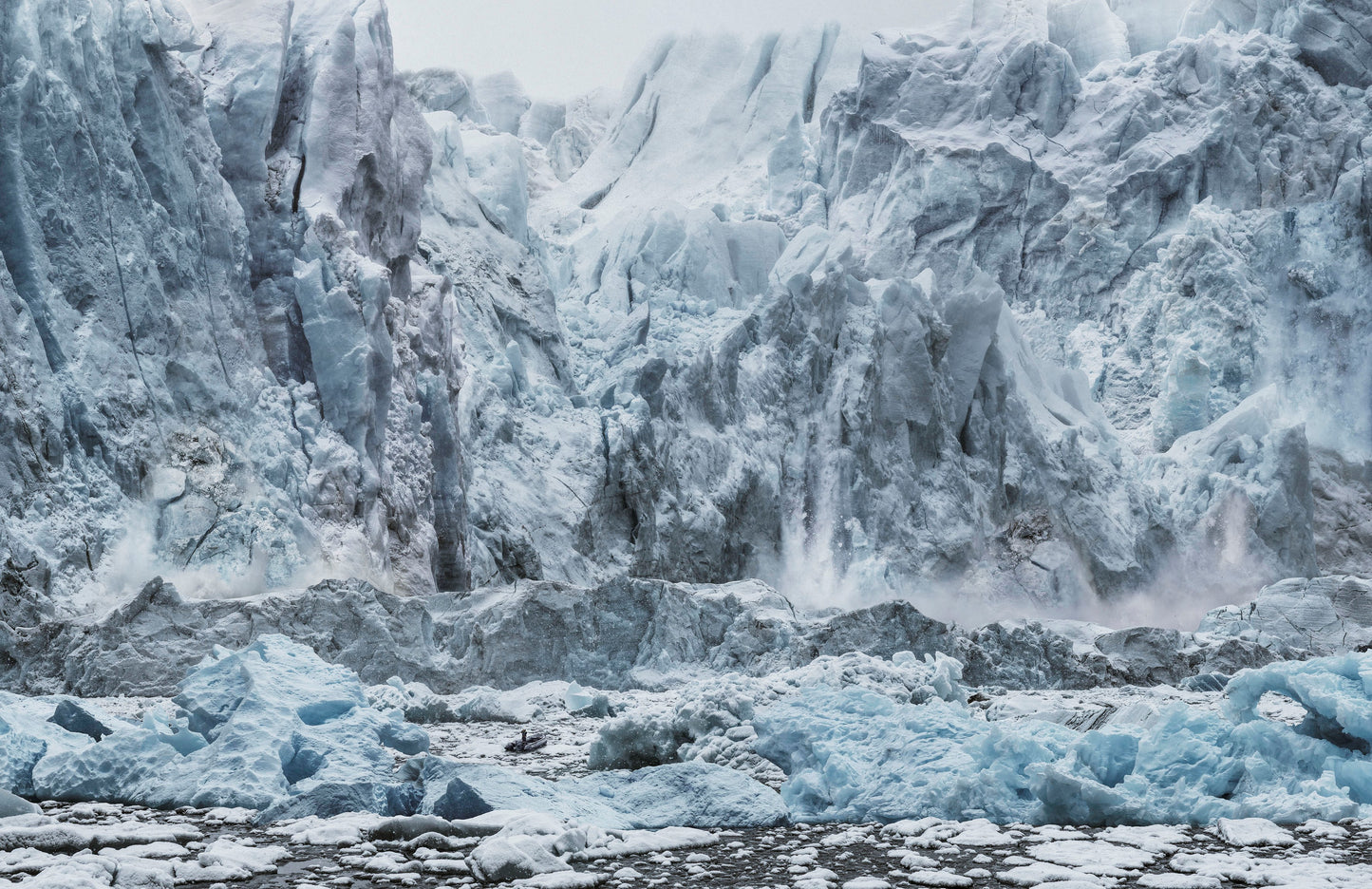
arctic elegy 2022
hybrid photography, archival pigment print, aludibond, diasec
custom frame, unique to work
44.0 x 68.0cm
collection of the artist
courtesy of the artist
Limited edition print created in support of MAPh
Michael Najjar (1966-)
Born in Landau, Germany, lives and works in Berlin, Germany
In his artworks Michael Najjar deals in a complex and critical way with the technological developments that are defining and drastically changing the early 21st century. Najjar develops his photographic and video works from an interdisciplinary understanding of art. He combines science, art and technology to create artistic visions and utopias of future social orders emerging under the influence of new technologies. Throughout his extensive oeuvre Najjar continually questions the relationship between reality and simulation. His work has been shown for the past 25 years extensively in numerous international gallery and museum exhibitions as well as at biennials.
Artist statement:
The Arctic is warming twice as fast as the rest of the world. Almost everything in the Arctic from ice and snow to human activity is now changing so quickly that in 20-30 years nothing will be the same as it is today. With the current melting of sea ice and the collapse of Arctic glaciers, our past is also melting away while at the same time our future is being shaken. We are facing very real and immediate threats to the entire planet from climate change and collapsing ecosystems.
The warming of the Arctic is causing glaciers to melt, sea levels to rise, weather catastrophes, geopolitical upheaval, species extinction, and the disappearance of cold-based cultures and traditions. By the middle of this century, the North Pole will most likely be completely ice-free during the summer months. Some countries have a great interest in such change as it means that new transit and trade routes are emerging and new access to previously inaccessible fossil resources is opening.
We must ask ourselves what if Arctic warming, thawing, melting and the other changes reflect future global environmental changes? What if the instability of the Arctic affects society as a whole and is a precursor of dramatic change: cities made uninhabitable by heat, sunken cities across the whole world, extinct species, lost cultures, massive numbers of climate refugees?
Despite its aesthetic beauty, ‘artic elegy’ paints a rather threatening picture regarding future changes in the world caused by the consequences of climate change. We are in transit between ecotopia and dystopia.
In May 2022 Najjar went on an Arctic expedition to the polar pack ice and glaciers of Spitzbergen. From a dinghy he took photos of the colossal Lilliehöökbreen glacier during an Arctic snowstorm. The picture shows a state of serious instability. The huge glacier wall is in the process of collapsing, a lone small rubber dinghy with one person standing in it is in danger of being swallowed up by the falling masses and floating blocks of ice. The midnight sun bathes the scene in an unreal light. Humans seem helpless in the face of the forces they have set in motion.
The preservation of our planet in its present state of equilibrium depends on the ice sheets in the polar regions. Once a tipping point is passed, it is too late. To avoid triggering dangerous tipping points as the Earth’s response to the tremendous impact of humankind, we need to combine our scientific understanding of the bio-physical limits of the Earth with transformative and sustainable technologies. Otherwise, we shall never reach the saving shore.
Would you like to support the future of MAPh?
MAPh
Donation to Support MAPh
Share
